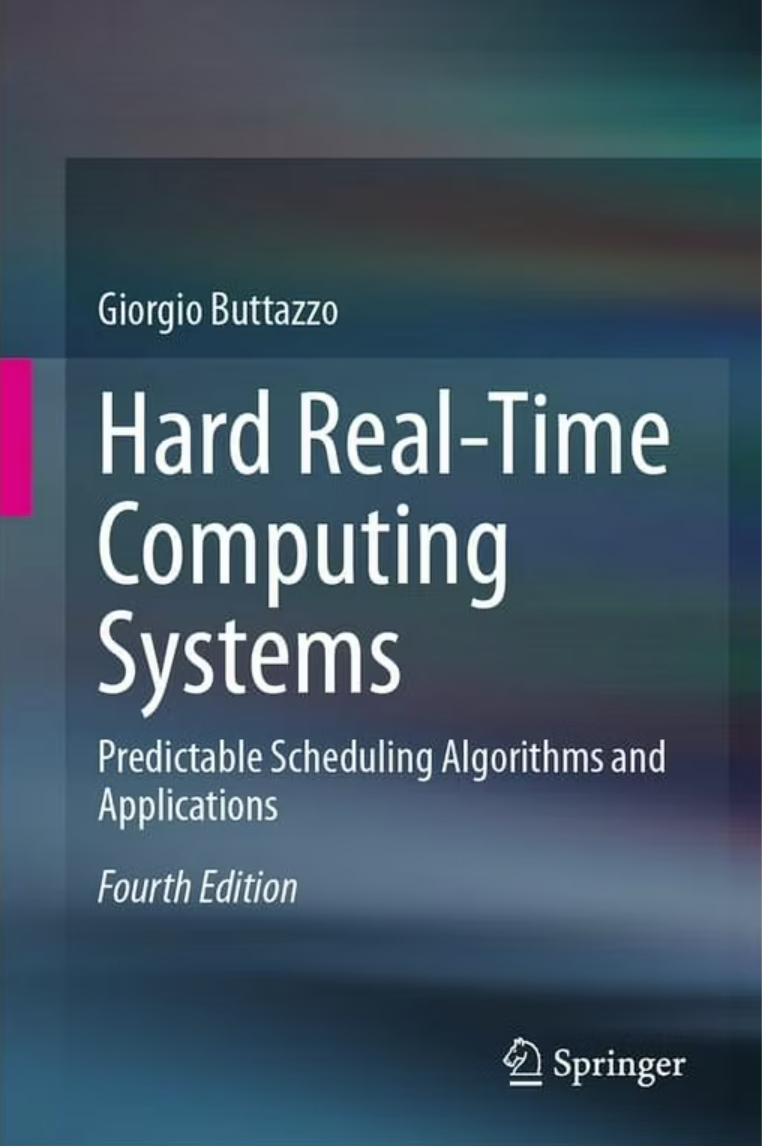
Hard Real-Time Computing Systems
Predictable Scheduling Algorithms and Applications
4th ed. 2024
Giorgio Buttazzo, Sant’Anna School of Advanced Studies, Pisa, Italy
The book Hard Real-Time Computing Systems presents the essential principles of
hard real-time systems, with an absolute focus on predictability. It describes
in depth temporal models, deadlines, processing load, and schedulability analysis. It
offers a comprehensive study of classic and modern scheduling algorithms, such as RM,
DM, and EDF, as well as practical variations used in industry.
The work also covers critical topics such as resource management, synchronization,
overrun handling, and execution on multicore platforms. It is a definitive reference
for designing critical embedded systems with formal timing guarantees.
Difficulty level:
👉 Presents advanced mathematical concepts, formal analysis, and scheduling, delving deeply into theory, timing models, and advanced algorithms used in critical systems.
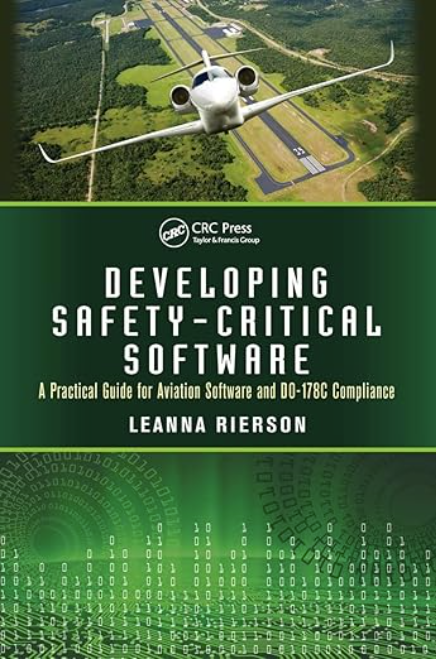
Developing Safety-Critical Software: A Practical Guide for Aviation Software and Do-178c Compliance
4th ed. 2024
Leanna Rierson
Developing Safety-Critical Software, by Leanna Rierson, is a practical and comprehensive
guide for anyone who needs to understand how to develop critical embedded software
in accordance with DO-178C and associated aviation certification standards. The author,
with extensive experience in industry and with regulatory authorities, translates the
formal requirements into clear practices for planning, requirements engineering, design, coding,
verification, configuration management, and quality assurance. The book shows how to
apply the full lifecycle process to produce safe, traceable, and auditable software,
offering realistic guidance, examples, and recommendations that go well beyond
the text of the standard. It is an indispensable reference for anyone who wants to work in
high-reliability embedded systems, especially in aviation and other
safety-critical domains.
Difficulty level:
👉 Requires prior mastery of software engineering, requirements, verification, and formal processes, applying the extreme rigor needed for certification in critical systems such as aviation.
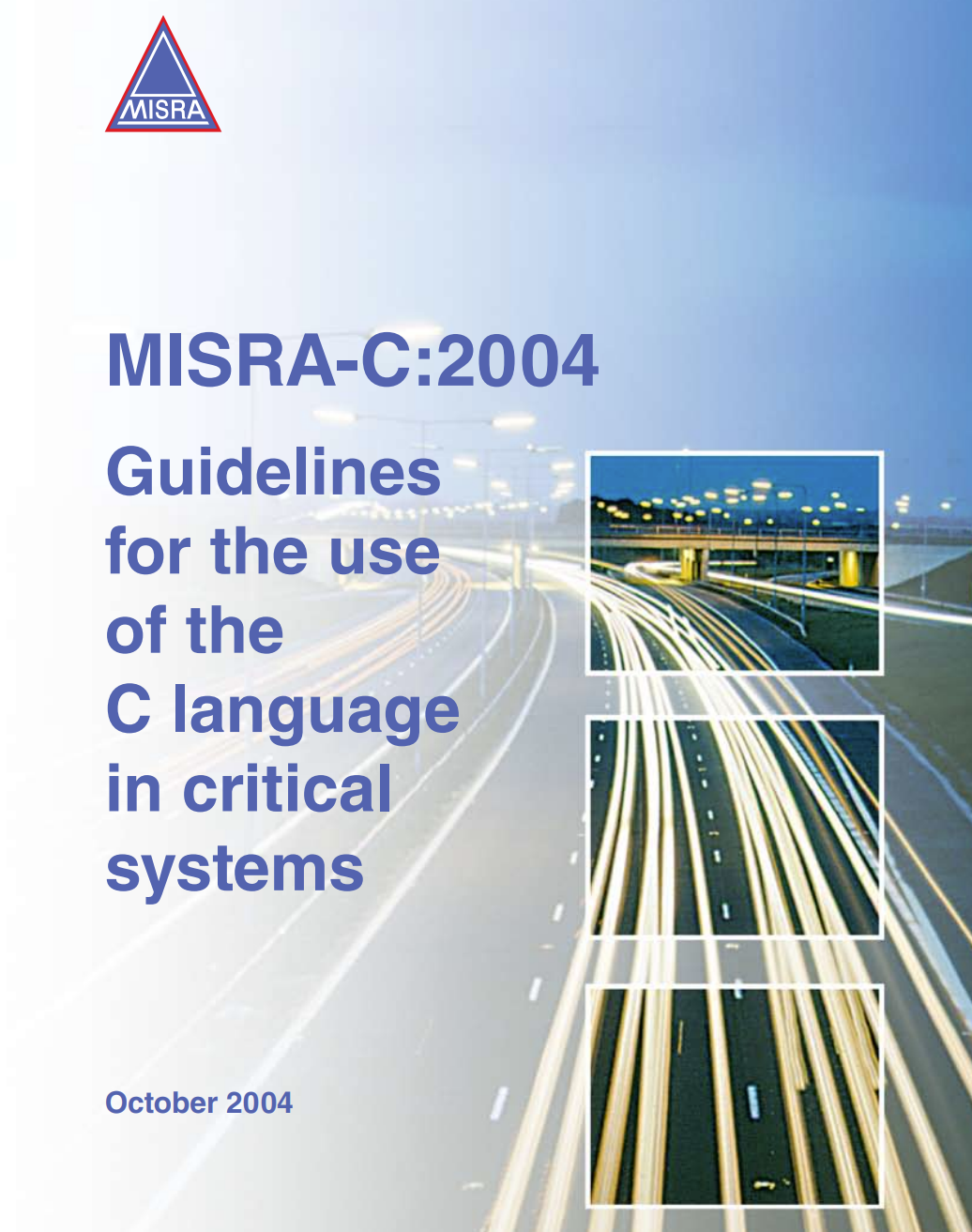
MISRA-C:2004 — Guidelines for the Use of the C Language in Critical Systems
4th ed. 2024
MISRA-C
This document establishes a strict set of rules for writing C software that is safe,
predictable, and suitable for critical systems, such as automotive, aerospace, and medical.
The guidelines focus on eliminating undefined behavior, reducing language ambiguity,
avoiding dangerous constructs, ensuring portability, and strengthening verifiability —
essential aspects when failures can cause serious harm or risk to life. The standard
defines mandatory and advisory rules, covering types, scope, control flow,
pointers, initialization, memory handling, and formal coding practices,
forming the basis of many industrial quality processes.
Difficulty level:
👉 Requires mastery of C


.png)


Comments and discussion